- Home
- /
- Latest Voices
- /
- Page 3
Latest Voices
Senior Center
The constraints of traditional marital roles put Rita at a disadvantage when she was unexpectedly widowed in her 80s. Finances, cars, and home repairs had been her husband’s purview. But Rita was determined to learn to manage her own affairs, despite her grief.
Her learning curve was steep and her missteps frequent. She initially needed reminders not to pay bills set up for autopay. Duped by scammers, Rita had to cancel credit cards and open new bank accounts a few times. After learning the art of the screenshot, she frequently texted photos of mail to her daughter with a query:
I Almost Didn’t Survive
I almost didn’t survive the accident that I can’t remember. It was New Year’s Eve, 1979 and my parents, both nurses, were headed home when a drunk driver ran a red light and T-boned their car on the passenger’s side. Their dog was frightened and ran away. My mom was taken to the hospital to evaluate for internal injuries. My dad was not harmed, but he stepped in a jar of honey that was broken in the accident. At the hospital, he remembers squishing and sticking down the cold, clean tile floors to get to his injured wife.
A Perilous Breakdown
It was late afternoon on the day of the winter solstice in 1983, and my car had broken down on the freeway. The damp, gloomy weather and encroaching darkness were textbook precursors of what was to come. I, and the friend who was with me, had walked to an emergency phone to call for roadside assistance, and we were walking in the emergency lane back to the car when traffic suddenly slowed.
A speeding van swerved into the emergency lane to avoid colliding with the car in front of it—hitting me instead. There was a loud thud as my body
Efficiency
There is a cloud that comes for me. I cannot name it exactly. It’s like smoke—the kind that seeps rather than billows, curling at the edges of the conversation the moment I step into a patient’s room. It starts as a feeling. Then a sound. A clock, ticking somewhere behind my sternum, low and insistent, counting down something I cannot afford to lose.
Ten minutes until rounds. Eight. Five.
Hold
I lean back in the reclined hospital chair, and the nurse places my baby heart to heart on my bare chest, for the first time. She covers us in blankets. Me with my mask, long hair up, a giant blanket covering my body, and a little pink and blue knit hat under my chin. I stare at the clock, the second hand, because I don’t know what else to do. A few beeps brings me back and I stare at the monitors beside the isolette. He forgets to breathe, his heart rate dips too low, his tubes on his legs,
The Missing Piece of a Terrible Puzzle
I didn’t know I was a victim of gun violence for more than forty years. Once I hit my twenties, I knew I had been sexually assaulted as a child. I carried bits and pieces of that memory, always in fragments: opening the door to a stranger, a breeze through an open window, curled into a little ball by my toy chest. I held these pieces tightly even though they didn’t make any sense.
Years of therapy followed. I tried talk therapy and EMDR, self-help groups and books. I kept searching for the missing piece that would bring me back
A “Straightforward” Neurosurgical Procedure
I once introduced myself as a retired academic emergency physician, bioethicist, and wilderness medicine specialist. These days, I prefer part-human, part-hardware.
It began in Antarctica. My gait deteriorated; my cognition slowed. My wife noticed both — gently, though with her unfortunate track record of being right.
Back home, a carousel of neurologists took their turns. Their theories ranged from imaginatively inaccurate to implausibly terminal. I suspected idiopathic normal pressure hydrocephalus. Most dismissed the idea. One brave neurologist agreed. Her colleagues dismissed her, too.
A neurosurgeon entered. Calm, competent, reassuring. “Let’s place a ventriculoperitoneal shunt,” he said. “Straightforward procedure.”
Death on a Freeway
The way I learned as a pediatric resident was by doing.
One night, during a neonatal rotation at the county maternity hospital, my call partner and I were paged for a “Code Blue” in the pediatric treatment room. I arrived after my partner. She looked at me over the nurse’s head and shook her head. No hope.
The boy had blood coming out of one ear. He wore an oxygen mask. The nurses were attempting IV access.
The boy’s parents were at the door, watching.
“What happened?” I asked. My partner said the boy had fallen out of a van
My Mother’s Life, My Life
A motor vehicle accident (MVA) changed my mother’s life forever, and maybe my life as well.
When she was 16, my mother, as a pedestrian, was hit by a drunk driver who went through a stop light. She had such a severe compound fracture of her femur and tibia that she was in traction for three years: in the hospital, her leg hanging in the air from pulleys, for three years when she was 16, 17, and 18 years old. We don’t do that to patients anymore. She also had multiple surgeries during those three years: for pinning; for osteomyelitis;

Subscribe
Get the latest issue of Pulse delivered weekly to your inbox, free.
Comments
More Visuals
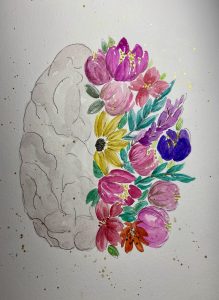
Blossom After the Storm

Transitions

Searching Uselessly for Food

Supply Closet Series

The First Time I Learned About “DNR”

Etherized Pietà

To Find Comfort
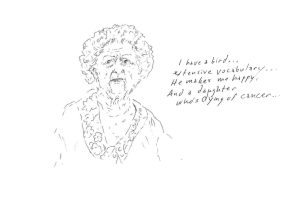
Remembering My Patients

The Healing Power of Focus Stacking