- Home
- /
- Latest Voices
- /
- Page 3
Latest Voices
Wisdom from Her Younger Self
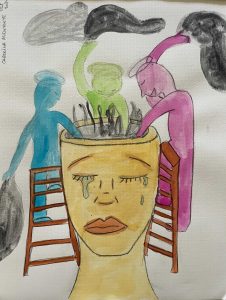
Grimacing, my middle-aged patient described a somatic pain radiating out from a deep-seated void. This decades-old ache manifested itself as intractable muscle tension or tenacious migraines or debilitating heartburn and was always accompanied by emotional anguish.
At the void’s root lay existential angst, exacerbated by dark skies, loneliness, major decisions, and life’s transitions. Her genogram revealed deeply entrenched generational trauma. Her lab workup was normal. She sought out various modalities—medication, acupuncture, psychotherapy, psychic readings, herbal remedies. Her flares were fewer, but they struck randomly, disrupting her life for days.
Enduring the Invisible
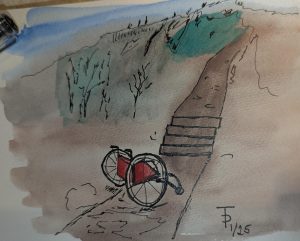
Like everyone, I was taught as a child how to walk across a room on my own and how to hold a spoon to feed myself. As an adult, I never paused to marvel at these ordinary acts, while strolling to the mailbox or eating dinner with my family—until they slipped from my reach, replaced by chronic pain and deformed limbs.
Now, a week before my sixty-fifth birthday, as my home health care aide gently drapes a towel over my chest so I can attempt to feed myself, my embarrassment over the mess I will undoubtedly make of my cottage
Debilitating Pain
The hospital CEO asked me to accommodate a new patient in my pain clinic, a young woman visiting for a few days, granddaughter of his colleague. “Of course,” I said.
“Jessica” was sixteen-ish, thin, athletic-looking, brunette. As usual, I addressed my questions to her, expecting her to tell me about her pain. But she replied, “Mom, you tell her.”
COVID Complications
My husband and I had COVID right around Christmas last year. Thanks to the vaccines, I didn’t feel extremely ill—just some aches and pains, coughing, sinus pain, and shortness of breath. I called my primary care provider, and the person on call said to just treat the symptoms. She prescribed cough medicine and an antibiotic for the apparent sinus infection.
A week or so later, I saw my primary for something else, and I told her, “I don’t think my leg is supposed to look like this.” It had become swollen and painful, and my foot was dusky. The ultrasonographer
Diagnosis
After the bone marrow biopsy, but before all results are in, when you have some strength and an appetite, I make your favorites—turkeyburgers, coleslaw, baked beans. You stand in the doorway, eyes on me, just as you did when you were a child, waiting for whatever I’d create. Abracadabra, I’d say, presenting buttered French toast or a plate of still-warm chocolate chip cookies. You ate the cookies and cried for your addict parents who’d left you with me, who’d left a wound I couldn’t soothe.
I was the aunt who tried to replace them. But you
No Mud, No Lotus
A doctor rarely imagines becoming a victim of workplace violence leading to chronic pain. I was a young, idealistic geriatrician fresh out of my training when I began working in a memory care facility. It was a high-turnover unit, with residents dying or moving and new patients with dementia admitting almost daily.
Reflections on Child Psychiatry
There is a specific kind of devastation in seeing a child failed by the world.
Today, I saw a fourteen-year-old girl who had taken glass to her skin. She came because she had been scratching away at her arm, at her eye. She had been banging her head against the wall. She had been screaming.
A Cruel Companion
Pain has been my constant—and cruel—companion for eighteen years. My suffering when bone was hitting bone in my left jaw led to the first of five maxillofacial surgeries. None worked, even when I had radiation to prevent more bone growth. I have had Botox, acupuncture, physical therapy, medication—but nothing alleviates the pain that radiates from my jaw to my ear, eye and head. The prosthetic device in my head prevents me from opening my mouth to any great extent; going for a dental cleaning is excruciating, while having dental X-rays is impossible.
November More Voices: Chronic Pain
Dear readers,
If I had to start my medical career from scratch, I’d devote more time to studying chronic pain. Specifically, I’d want to arm myself with more and better tools for alleviating it.
Over the years, I had many patients with chronic pain, and my success at treating them was spotty. Pain relievers were helpful–sometimes. Physical therapy and acupuncture were helpful–sometimes. A pain-management referral was helpful–sometimes. A conversation about past emotional traumas was helpful–sometimes.
But there were patients whom nothing seemed to help.